Is IPTV Better Than Cable TV in Canada?
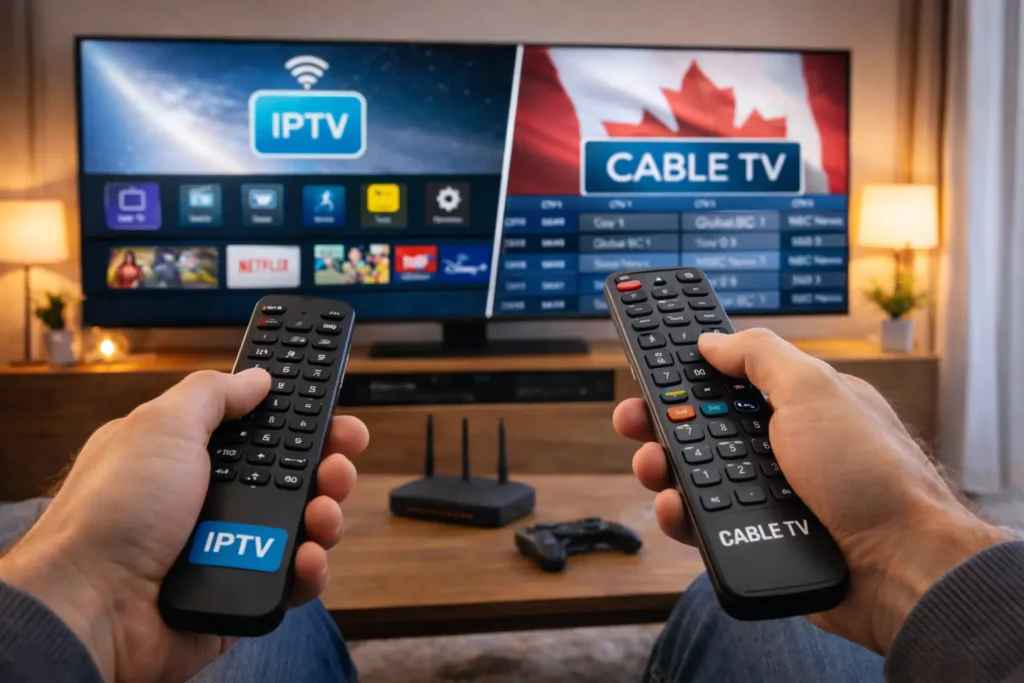
Yes, IPTV is better than cable TV in Canada for most households because it offers significantly more channels, lower monthly costs, better picture quality, multi-device compatibility, and no long-term contracts. While cable TV has been the standard for decades, it is now an outdated technology that forces you into expensive bundles, requires professional installation, and locks you into rigid contracts with steep cancellation fees.
A trusted provider like IPTV Canada gives you access to over 15,000 live channels and 60,000+ movies and series in 4K quality for a fraction of what a basic cable package costs.
How Does the Cost of IPTV Compare to Cable TV?
IPTV is dramatically cheaper than cable TV in Canada, and the price difference is the single biggest reason Canadians are switching in record numbers. A typical cable package in Canada costs between $80 and $150 per month, and that price often only covers a limited selection of channels with premium add-ons billed separately.
IPTV subscriptions, on the other hand, generally range from $10 to $30 per month and include access to thousands of live channels plus a massive library of movies and series on demand, all included in the base price with no hidden fees.
Here is a side-by-side cost comparison:
| Cost Factor | Cable TV | IPTV |
| Monthly subscription | $80–$150 | $10–$30 |
| Equipment rental | $10–$25/month | $0 (use your own devices) |
| Installation fee | $50–$150 one-time | $0 (self-install in minutes) |
| Premium channels | $10–$20/month extra each | Usually included |
| Contract commitment | 12–24 months required | No contract, cancel anytime |
| Annual total cost | $1,200–$2,100+ | $120–$360 |
| Yearly savings with IPTV | — | $800–$1,700+ |
Does IPTV Offer More Channels Than Cable?
Yes, IPTV offers vastly more channels than any cable package available in Canada, and it is not even close. A standard Canadian cable plan typically includes between 100 and 300 channels, and many of those are filler channels you never watch but are forced to pay for as part of a bundle.
IPTV services routinely offer 15,000 or more live channels covering every category imaginable, local Canadian channels, US networks, international programming in dozens of languages, specialty sports channels, and niche content that cable simply does not carry.
Beyond live TV, IPTV also includes massive on-demand libraries with tens of thousands of movies and series that you can watch anytime, which cable only offers through expensive pay-per-view or add-on packages.
Is the Picture Quality Better on IPTV or Cable?
IPTV matches and often surpasses cable TV in picture quality, especially when it comes to 4K Ultra HD content. Most cable providers in Canada still deliver the majority of their channels in standard HD (720p or 1080i), with only a handful of channels available in Full HD 1080p and very few in 4K.
IPTV providers, by contrast, offer a large number of channels in Full HD 1080p and 4K Ultra HD, delivering sharper, more vibrant images on modern televisions.
The only requirement for excellent picture quality on IPTV is a stable internet connection, at least 25 Mbps for Full HD and 50 Mbps for 4K, which the vast majority of Canadian internet plans already provide.
Key quality differences at a glance:
- Resolution : IPTV offers widespread 4K Ultra HD support, while cable is still mostly limited to 720p and 1080i.
- Consistency : Cable delivers a constant signal regardless of internet, but IPTV is equally stable with a connection of 25 Mbps or more.
- Audio quality : IPTV supports Dolby Digital and surround sound on compatible apps, matching or exceeding cable audio.
- On-demand quality : IPTV movies and series are often available in full 4K HDR, while cable VOD is typically limited to HD.
- Weather interference : Unlike satellite TV, neither cable nor IPTV is affected by storms or weather conditions.
- Upscaling : Modern IPTV apps include built-in upscaling features that improve the appearance of lower-resolution streams on 4K TVs.
What Can IPTV Do That Cable Cannot?
IPTV offers several features and capabilities that cable TV simply cannot match due to the fundamental limitations of cable technology.
Cable is a one-way broadcast system, the signal goes from the provider to your TV, and your interaction with it is extremely limited. IPTV, being internet-based, is fully interactive and gives you control over what you watch, when you watch it, and how you watch it.
This interactivity transforms IPTV from a simple TV service into a complete entertainment platform that adapts to your lifestyle rather than forcing you to adapt to a fixed broadcast schedule.
The gap between what cable can do and what IPTV can do grows wider every year as IPTV technology continues to advance.
Here is what IPTV offers that cable does not:
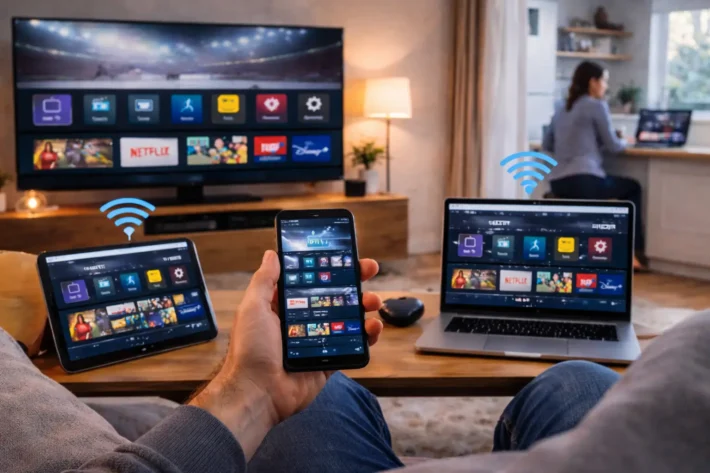
- Watch on any device, anywhere : Stream on your Smart TV, phone, tablet, laptop, or gaming console at home or on the go, while cable limits you to the TV with the set-top box.
- Massive on-demand library included : Access tens of thousands of movies and series at no extra cost, while cable charges separately for VOD and pay-per-view.
- No equipment or installation needed : Start watching in minutes using devices you already own, while cable requires a technician visit, set-top box rental, and coaxial wiring.
- No contracts or cancellation fees : Subscribe month to month and cancel anytime with zero penalties, while cable locks you into 12 to 24 month contracts with hefty exit fees.
- Catch-up and time-shift TV : Rewind live TV or watch programs you missed in the last few days, a feature most basic cable plans do not include without an expensive PVR add-on.
- International content in one place : Access channels from dozens of countries and languages under one subscription, while cable charges premium rates for international channel add-ons.
Does Cable Still Have Any Advantages Over IPTV?
Cable TV retains a few advantages, but they are becoming less relevant each year as internet infrastructure in Canada continues to improve. The most notable advantage is that cable does not depend on your internet connection, the signal travels through a dedicated coaxial cable, so your TV viewing is never affected by internet outages, Wi-Fi issues, or network congestion.
This can matter in rural areas where internet speeds are unreliable or where broadband is not yet widely available. Cable is also a more familiar technology for older viewers who may find IPTV apps and streaming devices confusing to set up and navigate.
However, for the vast majority of Canadian households that already have a reliable internet connection of 25 Mbps or more, these advantages are minimal compared to the overwhelming benefits IPTV offers in terms of content, cost, flexibility, and convenience.
Frequently Asked Questions
Can IPTV completely replace my cable subscription?
Yes. For the vast majority of Canadian households with a stable internet connection of 25 Mbps or more, IPTV fully replaces cable with more channels, more content, and a much lower price.
Will I lose my local Canadian channels if I switch to IPTV?
No. Reputable IPTV providers include all major Canadian local and regional channels in their standard packages. Verify during a free trial that your specific local channels are available.
Do I need to return my cable equipment if I cancel?
Yes, most cable providers require you to return rented set-top boxes and PVR units when you cancel. Check your provider’s policy to avoid equipment charges on your final bill.
How much money will I save by switching from cable to IPTV?
On average, Canadian households save between $800 and $1,700 per year by replacing their cable subscription with an IPTV service.
Is IPTV harder to set up than cable?
No, it is actually easier. Cable requires a technician visit and professional installation, while IPTV setup takes less than 10 minutes — just download an app, enter your credentials, and start watching.
Can I try IPTV before cancelling my cable?
Yes, and this is the recommended approach. Keep both services running during a free trial period so you can compare quality, channel availability, and reliability before making the final switch.
Is IPTV legal in Canada?
Yes. IPTV technology is fully legal in Canada. The legality depends on the provider and how the content is sourced. Always choose a reputable provider that operates transparently and offers clear terms of service.